
Officer POW Singapore Royal Engineers Canal Zone Borneo RCT Father Son Medal Set
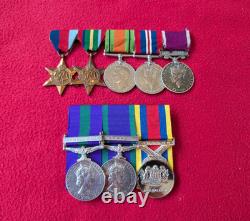
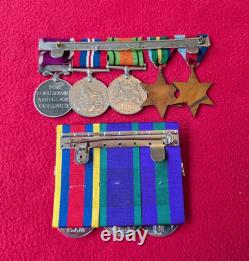
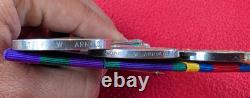
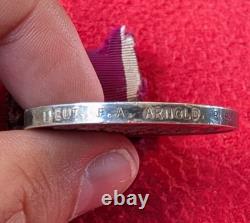
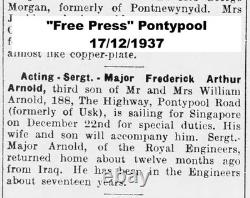
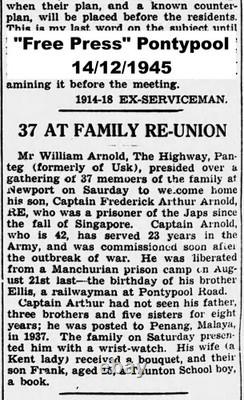

A remarkable and historically important British military father-and-son medal collection spanning pre-war service, the Second World War in the Far East, and Cold War post-colonial campaigns. The group represents two lifelong regular army careers, uniting a documented Japanese prisoner of war officer of the Royal Engineers who endured captivity from Singapore to Mukden, and his son who passed through the Royal Military Academy Sandhurst to retire as a Lieutenant-Colonel in the Royal Corps of Transport. The father's group consists of a swing-mounted five-medal set awarded to Captain Frederick Arthur Arnold, Royal Engineers. The Long Service and Good Conduct medal is officially impressed around the rim to Lieut. While the accompanying campaign stars and war medals are issued unnamed as standard. Born in Usk, Monmouthshire, in 1902, Frederick Arthur Arnold enlisted into the Royal Engineers as a regular Sapper in February 1922. Over a distinguished non-commissioned career, he qualified as a Clerk of Works, served overseas in Iraq, and by 1938 had risen to Warrant Officer Class I (Serjeant-Major). He received an emergency commission as a Lieutenant in January 1940 and sometime later, a further promotion to Captain. Captured on 15 February 1942 at the Fall of Singapore, he survived over three and a half years of harsh Japanese captivity. His route of internment took him from Changi to the gruelling camps of Heito and Shirakawa on Formosa (Taiwan), onward to the Miyata coal mine camp in Japan, and finally to the Hoten / Mukden camp in Manchuria, where senior officers were segregated until their liberation in late August 1945. The son's group consists of a court-mounted trio awarded to Lieutenant-Colonel Francis William Arnold, Royal Corps of Transport. The General Service Medal (1962) with Borneo clasp officially named to Major F. And the official Malaysian commemorative Pingat Jasa Malaysia medal.
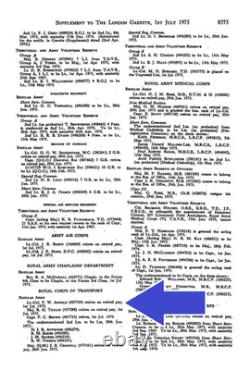
Having grown up on military postings and attended Taunton School while his father was captive, Francis entered Sandhurst and was gazetted to the Royal Army Service Corps in February 1950. He served through the Suez crisis period-later claiming the elusive Canal Zone clasp-and the Indonesian Confrontation in Borneo, progressing through the ranks until his retirement on retired pay as a Lieutenant-Colonel in July 1975.