
1932 Imperial Japanese Navy Destroyer Hibiki Launching Commemorative Medal
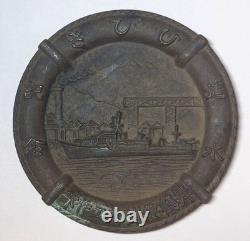
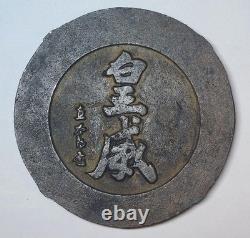
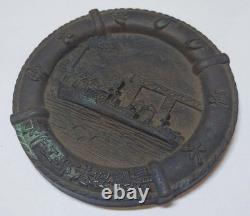
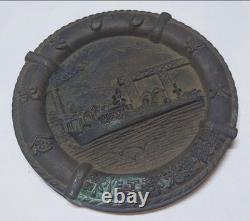
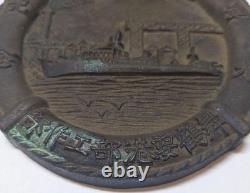

Hibiki - Launching Commemoration - Maizuru Naval District / Dockyard Works Dept. Center shows a relief of destroyer Hibiki, surrounded by a lifebuoy motif. = "Imperial Majesty" or "Imperial Prestige, " symbolizing the Emperor's authority and the nation's honor. A bronze commemorative medal/dish issued for the launching ceremony of the destroyer Hibiki, built at Maizuru Naval Arsenal in 1932 (Showa 7).
The launching ceremony marked the first time a vessel was set afloat - effectively its "birthday" - and was celebrated as a major naval and civic event. Launched on 21 June 1932 at Maizuru Naval Arsenal.
This medal was likely presented to attendees of the ceremony - naval officials, dockyard workers, and distinguished guests. Maizuru Naval District / Dockyard (Maizuru Yokobu), today the Japan Maritime Self-Defense Force Maizuru Base. Maizuru was the Imperial Navy's key shipbuilding hub on the Sea of Japan, where many destroyers and cruisers were constructed. Subject: Destroyer Hibiki, one of the famed "Special Type" Fubuki-class destroyers. Maker: Maizuru Naval District Works Department.Recipients: Ceremony participants, naval personnel, shipyard workers. Hibiki was one of the very few Fubuki-class destroyers to survive World War II. After Japan's surrender, she was transferred to the Soviet Navy and renamed Verniy (??????
Wartime service (Pacific War highlights). Escort force at Pearl Harbor Attack (1941). Tokyo Express reinforcement runs to Guadalcanal (1942-43). Battle of the Philippine Sea / Marianas Turkey Shoot (1944). Battle of Leyte Gulf (1944). Home Islands defense (1945; badly damaged at Kure and Maizuru). Launching ceremonies were state-ritual occasions linking the Navy and local community; commemoratives like this dish served as tangible proof of pride and participation. The word (Imperial Prestige) reflects the hopes placed on the new vessel as a bearer of national honor. Size: Diameter 10 cm, Weight 434 g. Back: Bold inscription, emphasizing dignity and state symbolism.Hibiki : One of 32 Fubuki-class ("Special Type") destroyers. Survived WWII, later served in the Soviet Navy. Maizuru Naval District: Key naval base and shipyard on the Sea of Japan, active from the Russo-Japanese War through WWII. For shipyard workers and naval officers of the early Showa era, Hibiki's launch was a moment of pride during a time of naval expansion under international treaty limits.
This medal was not merely a souvenir but a personal token of participation in the birth of a warship that would later fight in nearly every major Pacific campaign and survive to see the postwar world. International Buyers - Please Note. Thank you for your understanding.